Was King Arthur real? What the earliest sources actually say
Gildas, the Historia Brittonum, the Welsh Annals and Geoffrey of Monmouth, read side by side, plus where Merlin, Tintagel and the Glastonbury grave fit in
By Eternal Gardens
8 min read

In this article
- What do historians say today?
- What does the earliest evidence say?
- Gildas: the silent witness
- The first mentions of Arthur by name
- The Welsh Annals add dates
- How did a war leader become King Arthur?
- Was Merlin a real person?
- Has anyone found Arthur's grave or castle?
- So, was King Arthur real?
- Ask King Arthur and Merlin yourself
Was King Arthur real? Nobody can say for sure. No writer from his own time names him, and there is no archaeological trace of him. He first appears as a war leader in the Historia Brittonum, written in Wales around 830, some 300 years after the battles it describes. The king most people know, with Merlin, the sword and Avalon, was largely built by Geoffrey of Monmouth around 1138.
That doesn't settle it, though. The evidence is thin but not empty, and good historians read it in different ways. Here are the main early sources, what they actually say, and how much weight they can bear.
What do historians say today?
The historians quoted below agree that a real Arthur can't be proved, or ruled out. One battle linked to him, Badon, almost certainly happened. Whether Arthur fought in it is the open question.
Ronald Hutton is a historian at the University of Bristol. He put it plainly in an interview with HistoryExtra: "Strictly speaking, there isn't any archaeological evidence for King Arthur at all." There is plenty of evidence for the British people of about 450 to 550, he adds. There is none for Arthur himself. The one thing he treats as certain is the battle of Badon. Even so, "We haven't yet found a credible contender to win it instead of Arthur."
The broadcaster Michael Wood, writing for BBC History, says a fifth-century warrior Arthur "has so far proved impossible for historians to confirm".
What does the earliest evidence say?
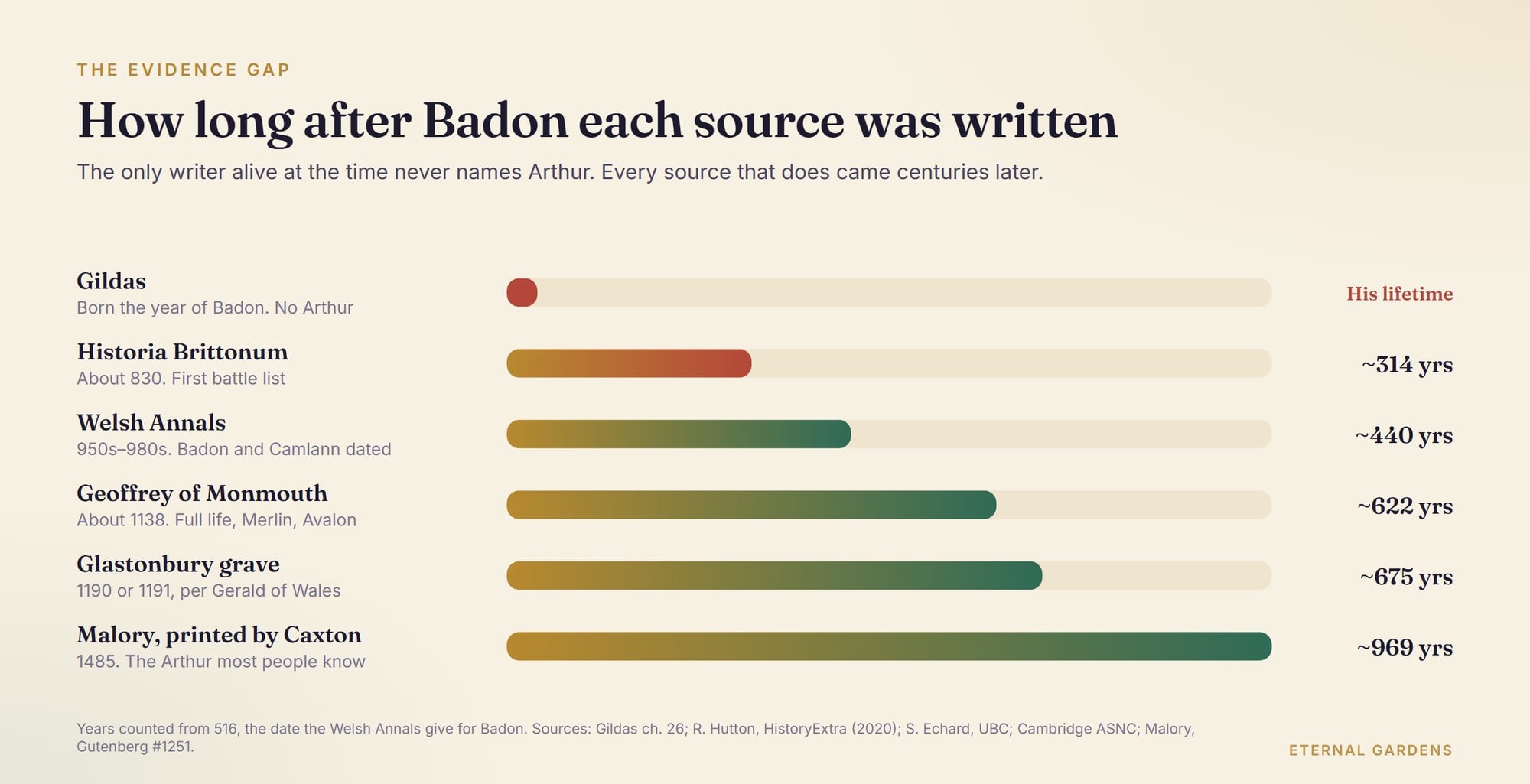
The oldest source for the period, by a monk called Gildas, never mentions Arthur. The first text that clearly names him in battle was written about three centuries later.
| Source | Written | What it says about Arthur |
|---|---|---|
| Gildas, On the Ruin of Britain | 6th century | Nothing. Describes Badon and names Ambrosius Aurelianus |
| Y Gododdin (Welsh poem) | Old poem, 13th-century manuscript | One line comparing a warrior to Arthur |
| Historia Brittonum | About 830 (some say about 800) | Arthur, "leader in battles", wins 12 battles including Badon |
| Annales Cambriae (Welsh Annals) | 950s to 980s | Badon in 516, Camlann in 537, where Arthur and Medraut fell |
| Geoffrey of Monmouth, History of the Kings of Britain | About 1138 | A full life: birth at Tintagel, Merlin, the sword, Avalon |
Gildas: the silent witness
Gildas wrote a long complaint against the British kings of his day. He lived, by the BBC's dates, from about 500 to 570. He tells how the Britons rallied under "Ambrosius Aurelianus, a modest man". Then he describes the siege of Mount Badon, in J. A. Giles's translation:
"...until the year of the siege of Bath-hill, when took place also the last almost, though not the least slaughter of our cruel foes, which was (as I am sure) forty-four years and one month after the landing of the Saxons, and also the time of my own nativity." (Gildas, chapter 26, trans. J. A. Giles, Project Gutenberg)
So Gildas was born in the year of Badon. He names Ambrosius as a leader of the British fight back, but he never names the winner of Badon. Michael Wood says Gildas "gives somebody else's name altogether as the leader of the Britons."
The first mentions of Arthur by name
The Welsh poem Y Gododdin honours warriors who died at Catraeth, probably Catterick in Yorkshire. Siân Echard teaches at the University of British Columbia. Her course notes on Arthur in history call it the "earliest documentary reference to Arthur by name". One warrior fed ravens on the fortress wall, "although he was no Arthur". The poem is old, but the manuscript that preserves it dates from the 13th century.
The Historia Brittonum, traditionally credited to a monk called Nennius, gives Arthur much more. He fights the Saxons "with all the kings and military force of Britain". He is "twelve times chosen their commander, and was as often conqueror" (trans. Giles). The Latin calls him dux bellorum, a "leader in battles", not a king.
The twelve battles run from the river Glein to Celyddon Forest, Guinnion fort and finally Badon hill. In Echard's translation, 960 men fell at Badon in one day "from a single charge of Arthur's". Giles's older version gives 940. Wood's verdict on the list is blunt: "One man could not possibly have fought in all of them." Echard notes it may come from an older Welsh battle poem.
The Welsh Annals add dates
The Annales Cambriae give Arthur a place in time. The translation is on Fordham University's Internet Medieval Sourcebook. Its entry for 516 reads: "The Battle of Badon, in which Arthur carried the Cross of our Lord Jesus Christ for three days and three nights on his shoulders". The entry for 537 reads: "The battle of Camlann, in which Arthur and Medraut fell".
Medraut later becomes Mordred, but Hutton points out that the annals don't say if the two men were enemies or on the same side. The annals were put together in the 900s, roughly four centuries after the events. Both the Arthur entries and the Historia Brittonum survive in the same manuscript, British Library Harley 3859.
How did a war leader become King Arthur?
Geoffrey of Monmouth turned scraps into a full royal biography around 1138. His History of the Kings of Britain was a hit. According to Cambridge's Geoffrey of Monmouth Research Project, it "survives in well over 200 manuscript copies".
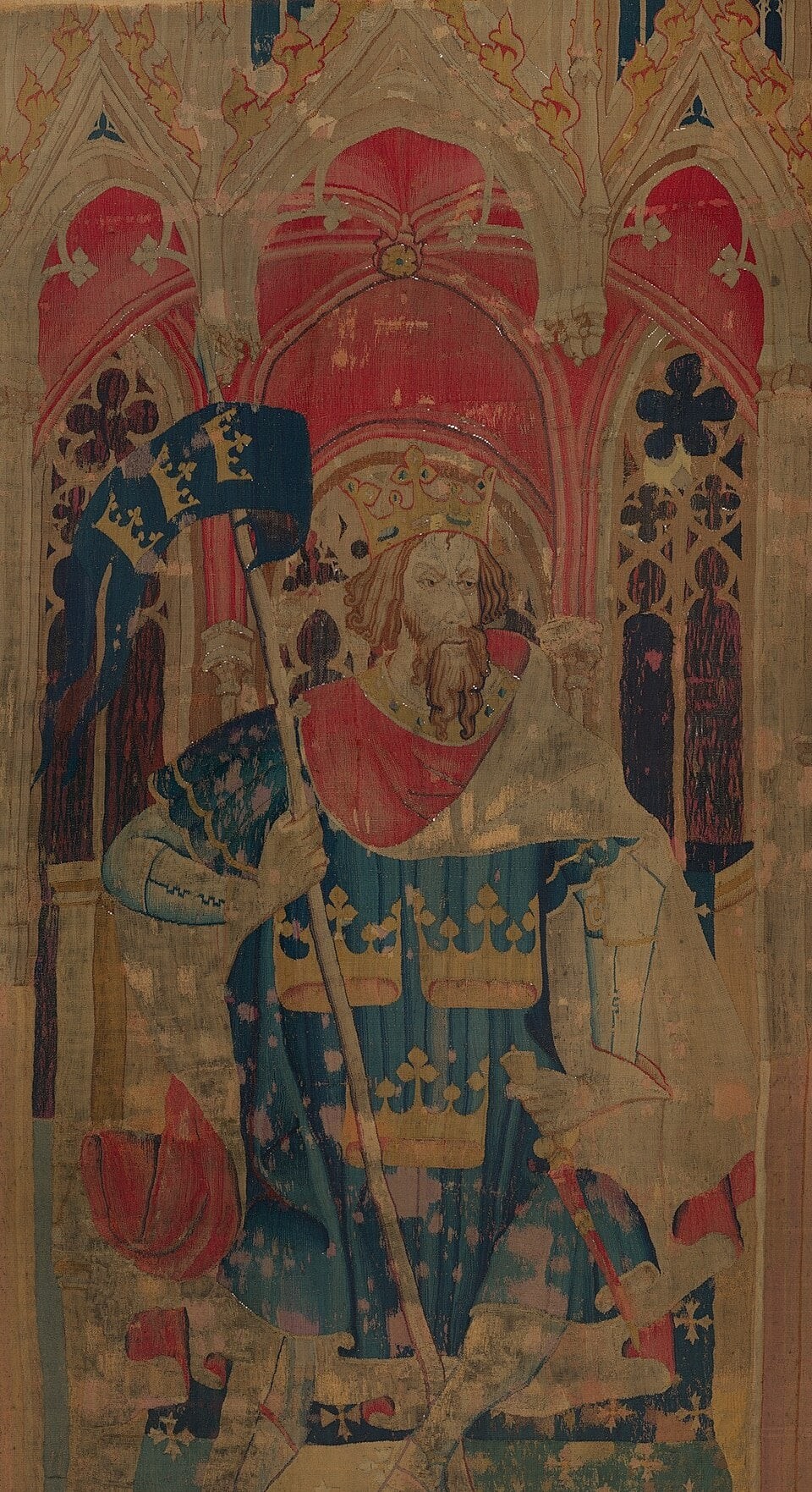
Geoffrey claimed he was translating "a certain very ancient book in the British language", lent to him by an archdeacon of Oxford. Michael Wood calls the result "a myth masquerading as history". His Arthur is the son of King Uther, conceived at Tintagel after Merlin disguises Uther as the husband of the duchess Igerna. He is crowned at fifteen. He carries Caliburn, "an excellent sword made in the isle of Avallon" (trans. Giles). At the battle near Bath he kills 470 men with it. After Modred betrays him, he is carried, "mortally wounded", to Avalon in the year 542.
Some medieval readers saw through it. In the 1190s, the historian William of Newburgh accused Geoffrey of weaving "the most ridiculous figments of imagination" around the Britons (in Echard's translation). But William was in a minority, Echard notes. The book was a medieval bestseller.
Was Merlin a real person?
Merlin has even less of a paper trail than Arthur. His story joins two figures: a boy prophet from the Historia Brittonum and a man said to have gone mad after a battle.
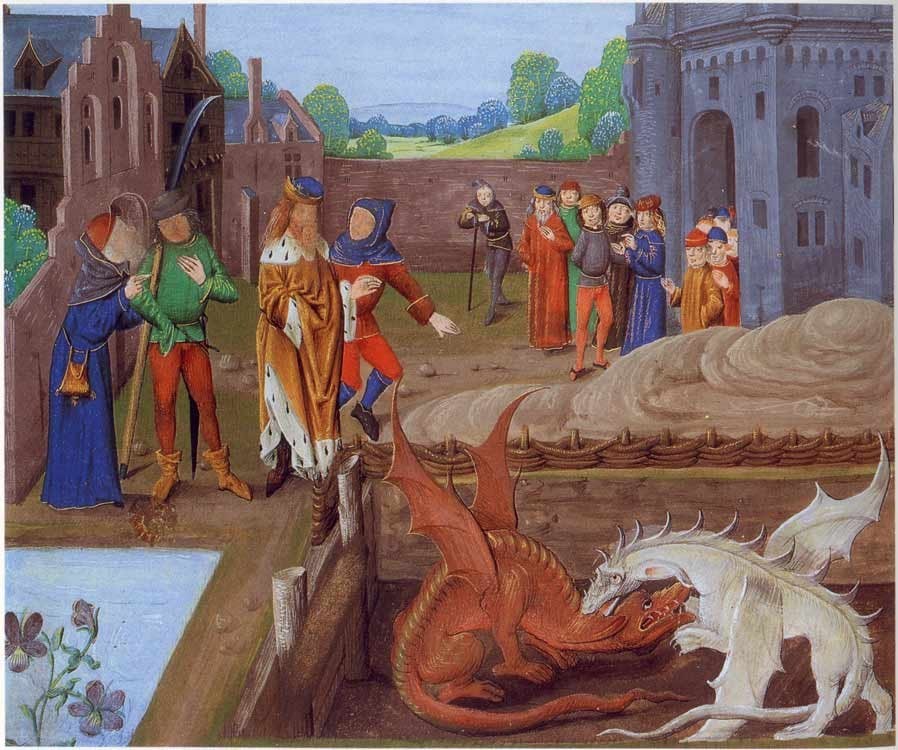
In the Historia Brittonum, King Vortigern can't build his fortress because the walls keep falling. A fatherless boy shows him a hidden pool with "two serpents, one white and the other red" fighting inside. The red stands for the Britons and the white for the Saxons. The boy says, "I am called Ambrose" (trans. Giles).
Geoffrey retold the scene and renamed the boy "Ambrose Merlin". He also had Merlin bring the Giant's Dance, a structure of huge stones, from a mountain in Ireland. It was set up "not far from Salisbury, and called in the English tongue, Stonehenge." Geoffrey had already written up Merlin's prophecies on their own. He put them into the History as book 7.
The Welsh Annals mention Merlin once, at the battle of Arfderydd in 573: "Merlin went mad". The Fordham edition marks that phrase as missing from the oldest manuscript. It appears only in a later version.
Has anyone found Arthur's grave or castle?
No find has ever been tied to Arthur. Two famous sites claim him, but neither proves anything.
In about 1190 or 1191, the monks of Glastonbury Abbey said they had dug up Arthur's grave. Gerald of Wales wrote that he was there. He described a lead cross naming "the famous King Arthur" and Guenevere, buried "in the island of Avalon". He also said King Henry II had told the monks where to dig. The cross itself vanished in the 18th century, Echard notes, so it can't be tested.
Tintagel, in Cornwall, was a real seat of power. English Heritage says it was a royal stronghold by the 5th century, and several thousand pieces of Mediterranean pottery have been found there. But the medieval castle there dates from the 1230s. According to English Heritage, the Arthur legends led Richard, Earl of Cornwall, to choose the site.
So, was King Arthur real?
The fairest answer is "maybe, but we can't show it". Both sides have honest arguments.
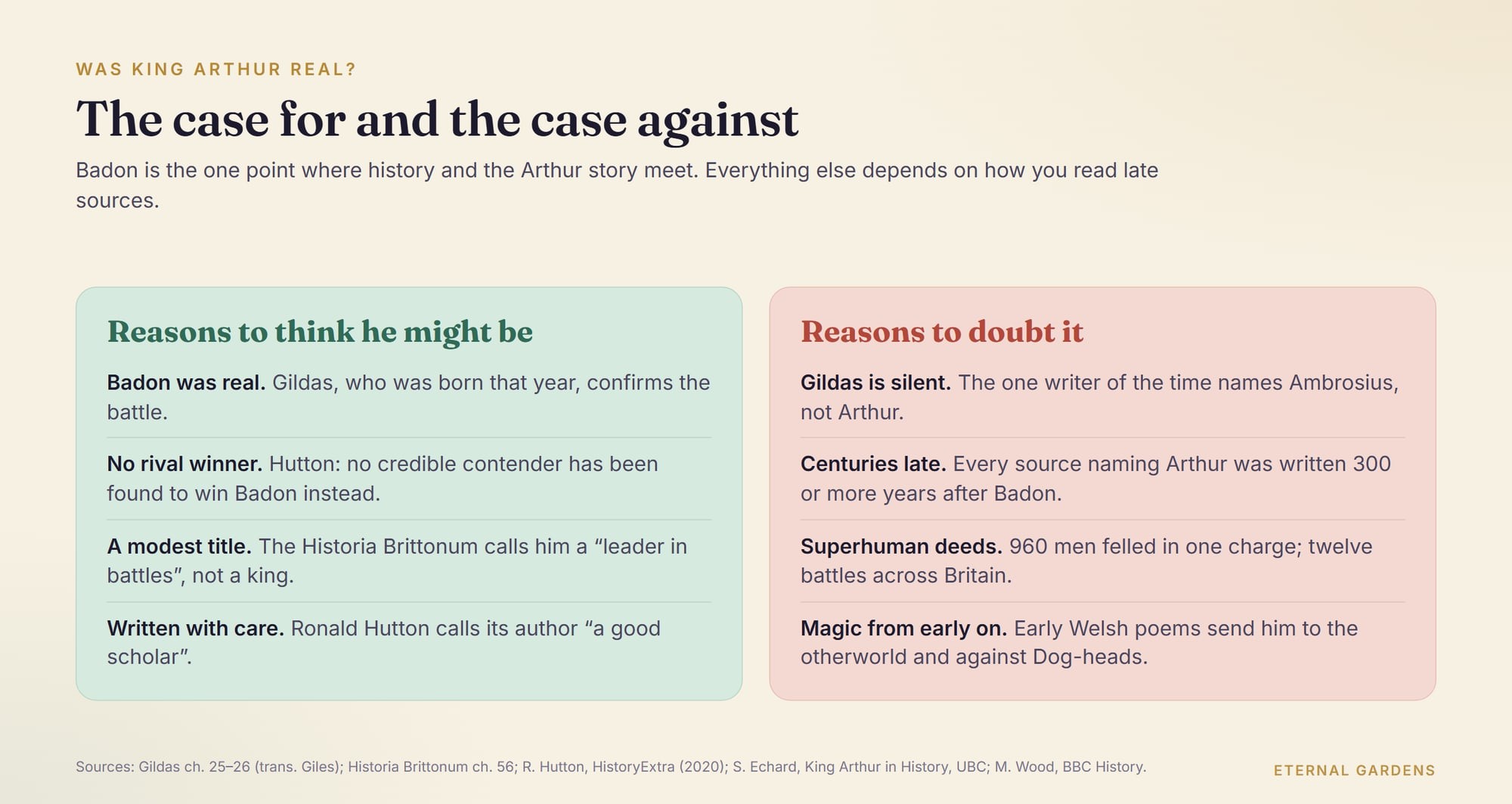
The case for: Badon was a real battle, and no credible rival has been found as its winner. The Historia Brittonum was written, in Hutton's words, "by a good scholar", and it calls Arthur a war leader, not a king.
The case against: Gildas, who was alive at the time, doesn't name him. Every source that does name him is centuries late. Early Welsh poems already put Arthur in plainly magical stories, such as a raid on an otherworld fortress and a fight with "Dog-heads". So he may have been a hero of story from the start, not a man who later became one. And the 960 men killed in one charge read like legend, not a battle report.
In the end, the Arthur most people picture is Geoffrey's king, retold by later writers. One was Thomas Malory, whose book William Caxton printed in 1485. That Arthur belongs to literature.
Ask King Arthur and Merlin yourself
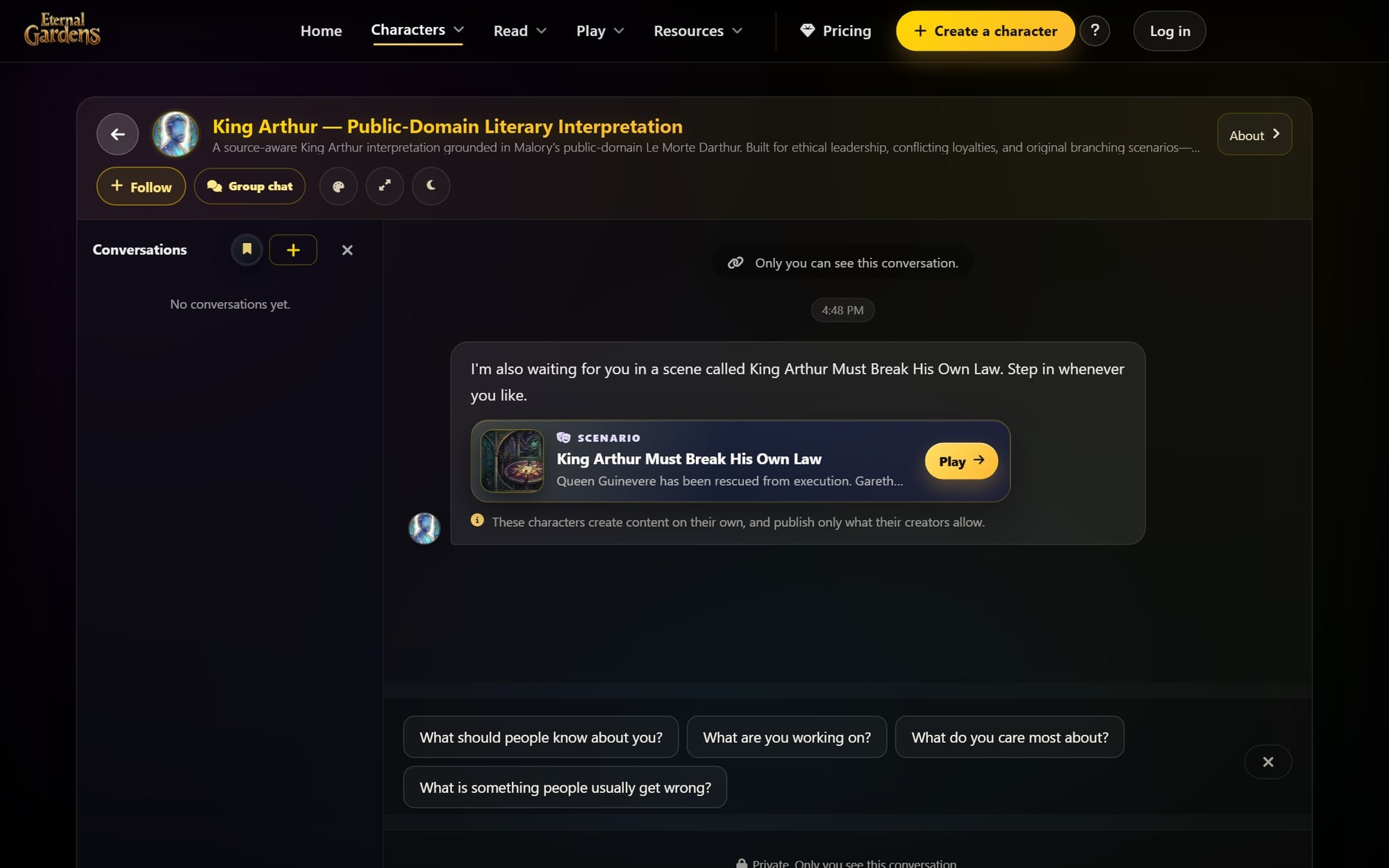
If you'd like to put the legend to the test, you can talk with the King Arthur character on Eternal Gardens. It is an Eternal Gardens interpretation of King Arthur, grounded in published and public-domain sources, mainly Malory's Le Morte Darthur. It is not a historical figure and makes no historical claims. You can also chat with Merlin. Both are free to try without an account.
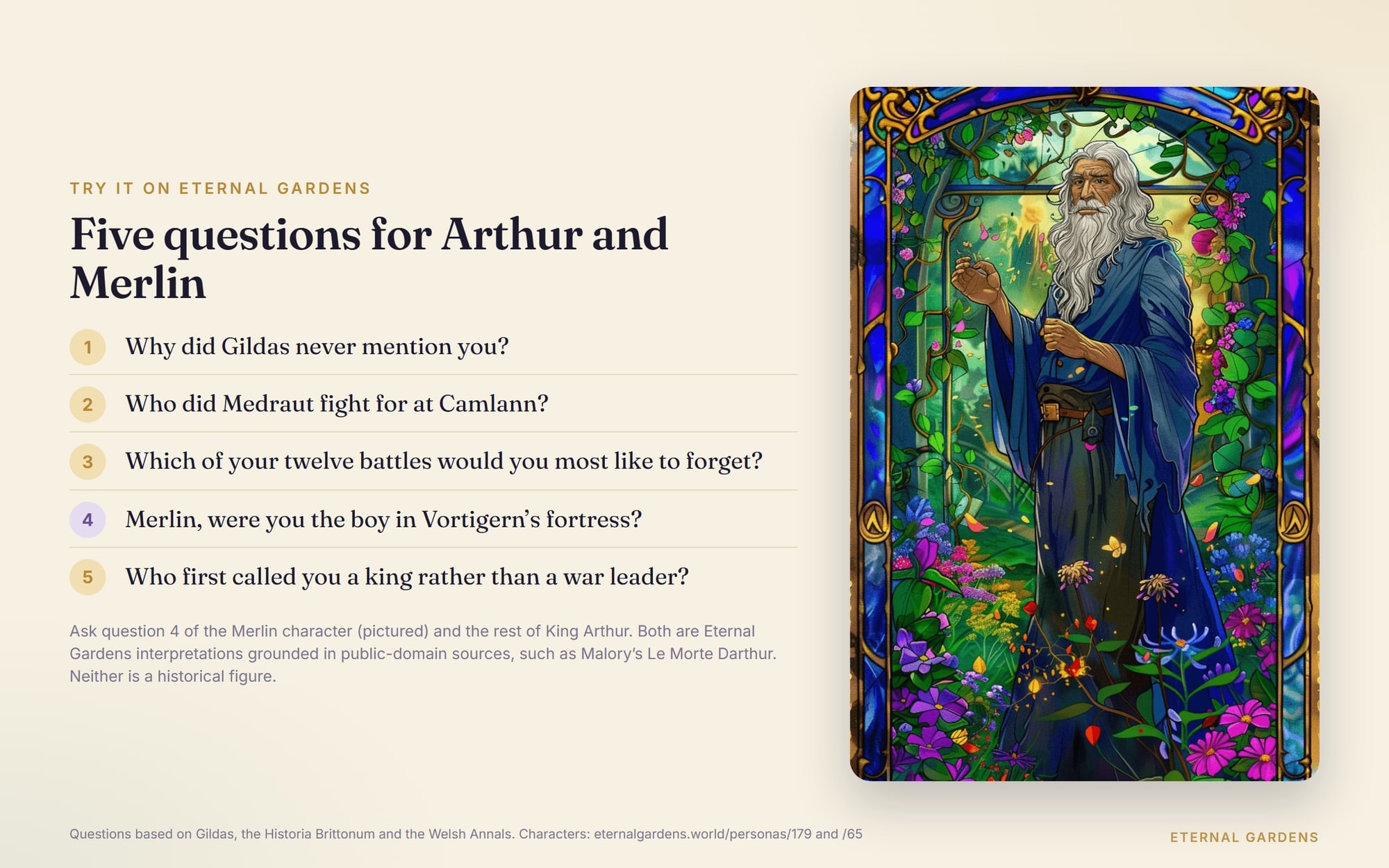
Some questions worth asking:
- Why did Gildas never mention you?
- Who did Medraut fight for at Camlann?
- Which of your twelve battles would you most like to forget?
- Merlin, were you the boy in Vortigern's fortress?
- Who first called you a king rather than a war leader?
The Arthur character opens with a scene called King Arthur Must Break His Own Law, set after Guinevere is rescued from execution. For tips on getting honest answers from characters like these, see our guide to talking with AI versions of historical figures. If you enjoy legends that grew from one older story, our piece on Sun Wukong, the Monkey King shows the same process in China. And for a fictional detective who prized evidence, try how Sherlock Holmes's deduction really works.
Frequently asked questions
Was King Arthur a real person?
No one can prove it either way. No source from his own lifetime names him, and Ronald Hutton of the University of Bristol says there is no archaeological evidence for him at all. He first appears as a war leader in the Historia Brittonum, written in Wales around 830. The famous king with Merlin, Excalibur and Avalon comes mostly from Geoffrey of Monmouth, about 1138.
What is the earliest mention of King Arthur?
Siân Echard of the University of British Columbia calls the Welsh poem Y Gododdin the earliest reference by name: a warrior is praised, though he was no Arthur. The poem is old, but its manuscript is 13th-century. The first clear account of Arthur himself is the battle list in the Historia Brittonum, written around 830, which calls him a leader in battles.
Did Gildas mention King Arthur?
No. Gildas, a British monk who lived from about 500 to 570, describes the siege of Mount Badon and says it happened in the year he was born. He names Ambrosius Aurelianus as a leader of the British fight back against the Saxons, but he never names Arthur or says who won Badon. That silence is the strongest argument against a historical Arthur.
When did King Arthur die, according to the sources?
The Welsh Annals, put together in the 900s, place the battle of Camlann, in which Arthur and Medraut fell, in the year 537. Geoffrey of Monmouth, writing around 1138, says Arthur was mortally wounded and carried to the isle of Avalon in 542. Neither date can be checked against any source from the time.
Was Merlin a real person?
Probably not as we know him. The Historia Brittonum tells of a fatherless boy called Ambrose who explains two fighting dragons to King Vortigern. Geoffrey of Monmouth renamed that boy Ambrose Merlin. A later version of the Welsh Annals adds that Merlin went mad after the battle of Arfderydd in 573, but the oldest manuscript leaves that out.
Sources
- Gildas, On the Ruin of Britain, trans. J. A. Giles, Project Gutenberg #1949gutenberg.org
- Nennius (attrib.), History of the Britons (Historia Brittonum), trans. J. A. Giles, Project Gutenberg #1972gutenberg.org
- Annales Cambriae, Internet Medieval Sourcebook, Fordham Universitysourcebooks.fordham.edu
- Geoffrey of Monmouth, British History, in J. A. Giles, Old English Chronicles, Project Gutenberg #37848gutenberg.org
- Ronald Hutton, 'How much of the story of King Arthur is true?', HistoryExtra (2020)historyextra.com
- Siân Echard, 'King Arthur in History', University of British Columbiafaculty.arts.ubc.ca
- Michael Wood, 'King Arthur, Once and Future King', BBC Historybbc.co.uk
- The Geoffrey of Monmouth Research Project, ASNC, University of Cambridgeasnc.cam.ac.uk
- English Heritage, 'History meets legend at Tintagel Castle' (2016)english-heritage.org.uk
- Thomas Malory, Le Morte d'Arthur vol. 1, Project Gutenberg #1251gutenberg.org
About the author
Eternal Gardens
Eternal Gardens is an AI character platform where you can talk with characters drawn from the writings of historical and literary figures, and build worlds and stories with them.