ChatGPT vs AI marketing tool: when is ChatGPT enough?
A fair way to decide, using OpenAI's own pages, a five-question test and a two-week time log.
By Réson
8 min read
In this article
- What can ChatGPT already do for your marketing?
- When is ChatGPT alone enough?
- Set ChatGPT up so it stays enough
- Where does a dedicated AI marketing tool add value?
- A record of facts you can check
- A calendar tied to a goal
- Sign-off before anything goes out
- Two languages kept in step
- Consent for email
- ChatGPT vs AI marketing tool: a decision table
- What does each option really cost?
- How to decide in two weeks
- Can you use ChatGPT and a marketing tool together?
- Try the hybrid workflow in Réson
Often, you don't need an AI marketing tool if you already use ChatGPT. If you do your own marketing in one language and post a few times a week, ChatGPT with a project is enough. In the ChatGPT vs AI marketing tool decision, a dedicated tool earns its price when other people sign off on content, your facts change often, or you send marketing email under Canada's anti-spam law.
This guide is for owners who already use ChatGPT and wonder whether a second subscription is worth it. It describes ChatGPT only from OpenAI's own help and pricing pages, as of November 2026. It doesn't repeat prompts. For those, see our guide to ChatGPT prompts that work for small business marketing.
What can ChatGPT already do for your marketing?
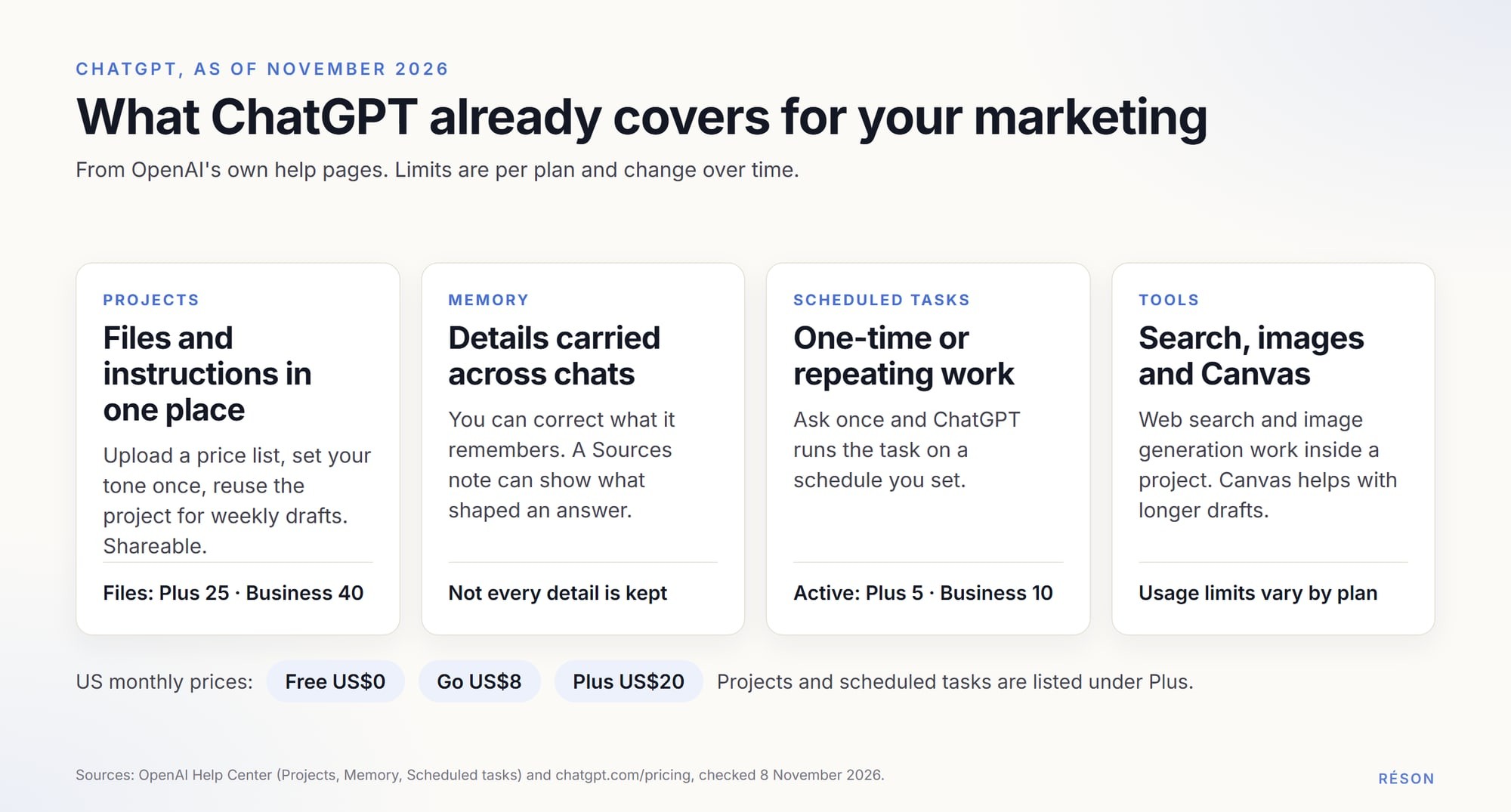
Quite a lot. As of November 2026, OpenAI's help pages describe projects that hold your files and instructions, memory that carries details across chats, and scheduled tasks for recurring work. For a solo owner, that covers most of the drafting.
Here is what those pages say, in plain terms:
- Projects. OpenAI's Projects page describes a project as one place for related chats and files, plus instructions that apply only inside it. You can upload a price list, describe your tone once, and come back each week for new drafts. Plus allows 25 files per project and Business allows 40. You can also share a project with a teammate.
- Memory. With Memory on, ChatGPT can recall preferences and details from past chats and other sources, says the Memory help page. You can correct what it remembers. A Sources note can show which chat or file shaped an answer.
- Scheduled tasks. The scheduled tasks page says ChatGPT can run one-time or repeating tasks, such as a Monday list of post ideas. Plus allows 5 active tasks; Business allows 10.
- Tools inside a project. Web search and image generation both work there. So does Canvas, for longer drafts.
OpenAI's pricing page lists projects and scheduled tasks under Plus, at US$20 a month (US prices, checked 8 November 2026). Go costs US$8 and Free costs nothing, with tighter limits.
When is ChatGPT alone enough?
ChatGPT alone is enough when one person writes and posts everything in one language and the business facts rarely change. In that case a second tool mostly adds a login and a bill.
Answer these five questions honestly. If every answer is yes, keep your money:
- Are you the only person who writes and approves your marketing?
- Do you post or email a few times a week, rather than daily on several channels?
- Do your prices and offers change only a few times a year?
- Do you market in one language?
- Do you send newsletters through an email service that already handles sign-ups and unsubscribes?
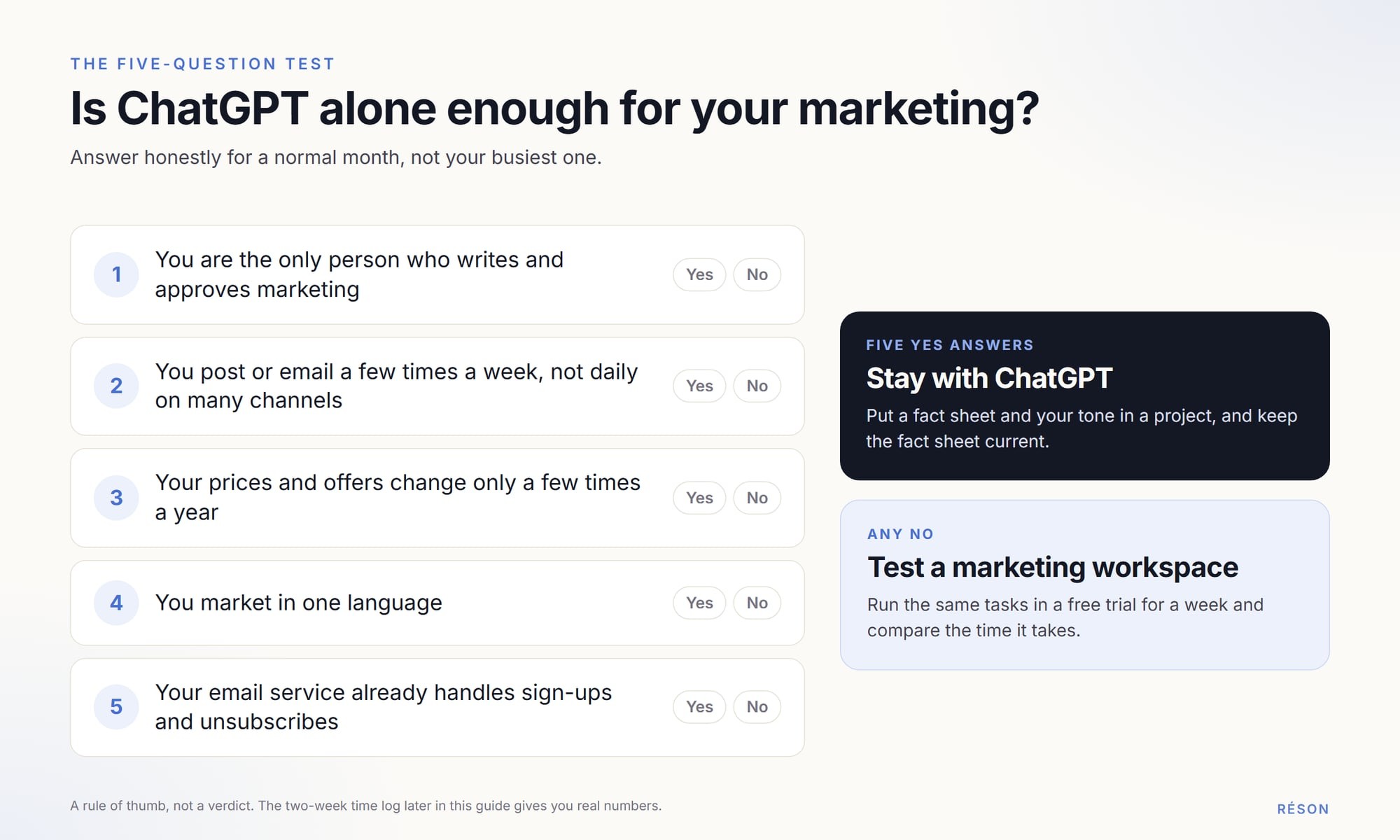
That could describe a one-person bakery or a plumber. For them, the best upgrade is free: a good fact sheet saved in a project.
Set ChatGPT up so it stays enough
A little setup makes ChatGPT far more reliable for marketing. Plan on half an hour.
- Create a project for your marketing and upload your current price list and a one-page fact sheet.
- Add project instructions about your tone and the words you never use.
- Add three past posts you liked, so drafts start close to your voice.
- Update the fact sheet the same day a price or offer changes.
- Check your data setting. For personal accounts, OpenAI says chats may help improve its models while "Improve the model for everyone" is on, and you can turn it off in Data controls.
Our guide to building a business knowledge pack shows what to put in the fact sheet.
Where does a dedicated AI marketing tool add value?
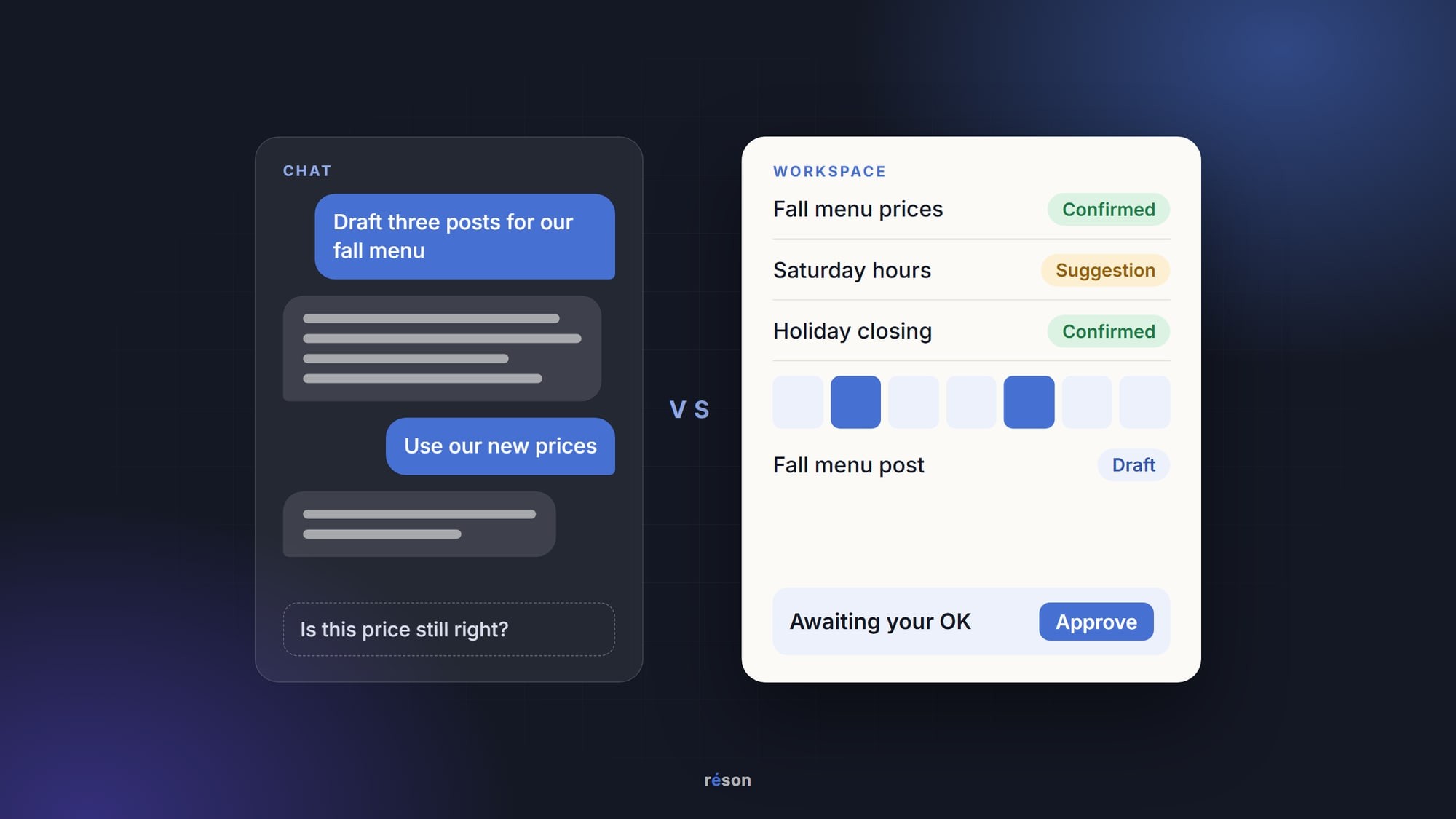
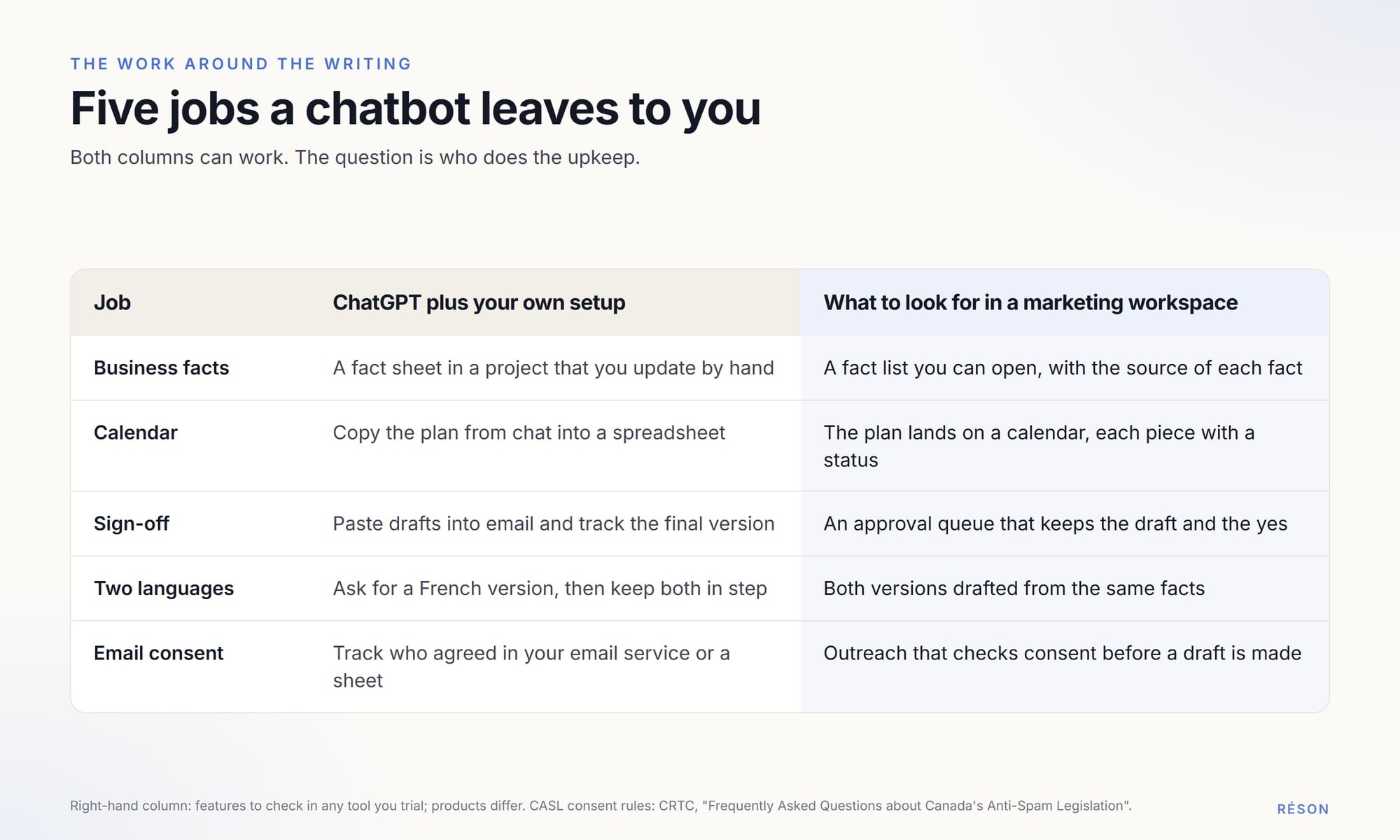
A dedicated marketing workspace helps with the jobs around the writing. The drafting is the easy part; the upkeep around it is where the hours go. A chatbot can help with each job. You still build and maintain that system yourself.
A record of facts you can check
ChatGPT's memory is useful, but it is selective by design. OpenAI's Memory page says it "does not retain every detail from every conversation," and that ChatGPT picks what seems relevant. The Projects page adds that project memory has no list you can browse. That works well for tone and habits. It is weaker for facts a customer will act on. A price is one; a holiday closing is another.
Look for a workspace that keeps a list of business facts you can open and correct. The better ones show where each fact came from and draft only from that list.
A calendar tied to a goal
ChatGPT can write a four-week plan as a table. Turning that table into dated posts with reminders is then up to you. A marketing tool with a calendar gives each piece a date and a status. Our guide to an AI content calendar shows how to run one either way.
Sign-off before anything goes out
If a partner or a client approves posts, you need to know which version they saw. OpenAI's Projects page says chats in a shared project can be branched, but people can't edit the same chat at the same time. Without an approval step, drafts end up pasted into email, and nobody is sure which one is final. A workspace with an approval queue keeps the draft and the yes together.
Two languages kept in step
You can ask ChatGPT for a French version of any draft. The work is keeping the English and French versions in step when an offer changes, and having someone who knows Québec French read them. If you publish in both languages every week, that upkeep is a real cost.
Consent for email
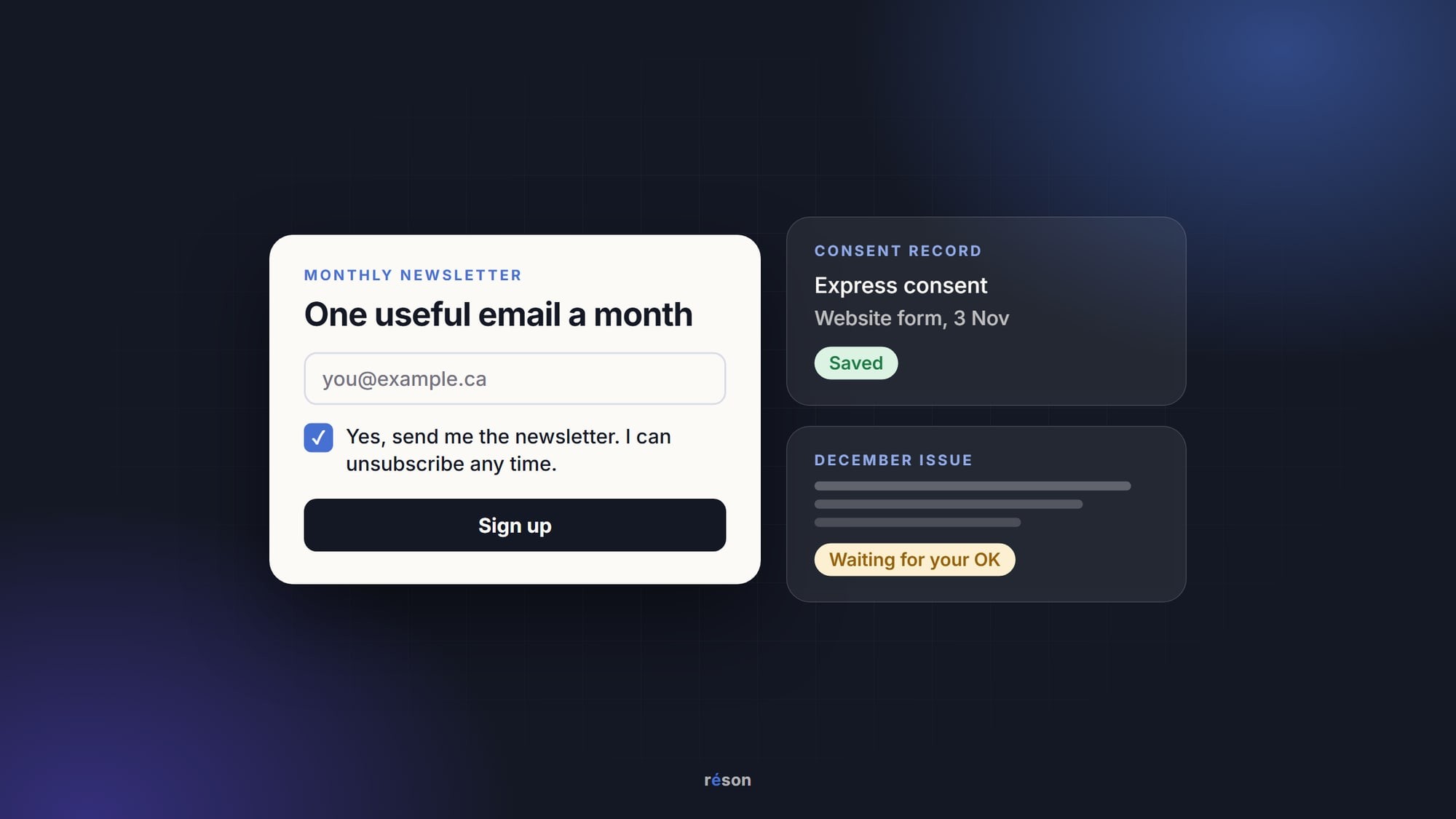
Canada's anti-spam law, CASL, has three general requirements for a commercial email: consent, identification of the sender, and a way to unsubscribe. That is how the CRTC's CASL FAQ lists them. A chatbot can draft the email. It doesn't know who agreed to receive it unless you tell it. For outreach, a tool that checks your contact list for consent matters more than a better draft. This is general information, not legal advice. Our CASL checklist for small businesses goes further.
ChatGPT vs AI marketing tool: a decision table
Find your situation in each row. If most rows land in the right-hand column, a dedicated tool is worth a trial.
| Your situation | ChatGPT alone works well | A marketing workspace helps |
|---|---|---|
| Who writes and approves | You, alone | Two or more people, or a client who signs off |
| How often you publish | A few times a week | Daily, or on several channels |
| How often facts change | Rarely | Menus, prices or offers change monthly |
| Languages | One | English and French |
| A newsletter through a service with unsubscribe built in | Outreach where consent must be checked first | |
| Planning | Posts as ideas come | Campaigns with dates and goals |
| Brand look | One logo and two colours | Several products, people or brand photos |
| Budget | You want the lowest monthly cost | Your time costs more than the subscription |
What does each option really cost?
ChatGPT Plus is US$20 a month on OpenAI's US pricing page. A dedicated marketing tool is a second subscription on top, since you will likely keep ChatGPT anyway. The bigger cost is usually your own time, and only you can measure it.
Ask yourself three plain questions. How many minutes a week go to re-explaining your business to the chatbot? How often has a wrong price or date slipped into a draft? How long does one post take to travel from chat to calendar to approval to posting? If the honest answers are "a few", "never" and "not long", the cheaper setup is the right one.
How to decide in two weeks
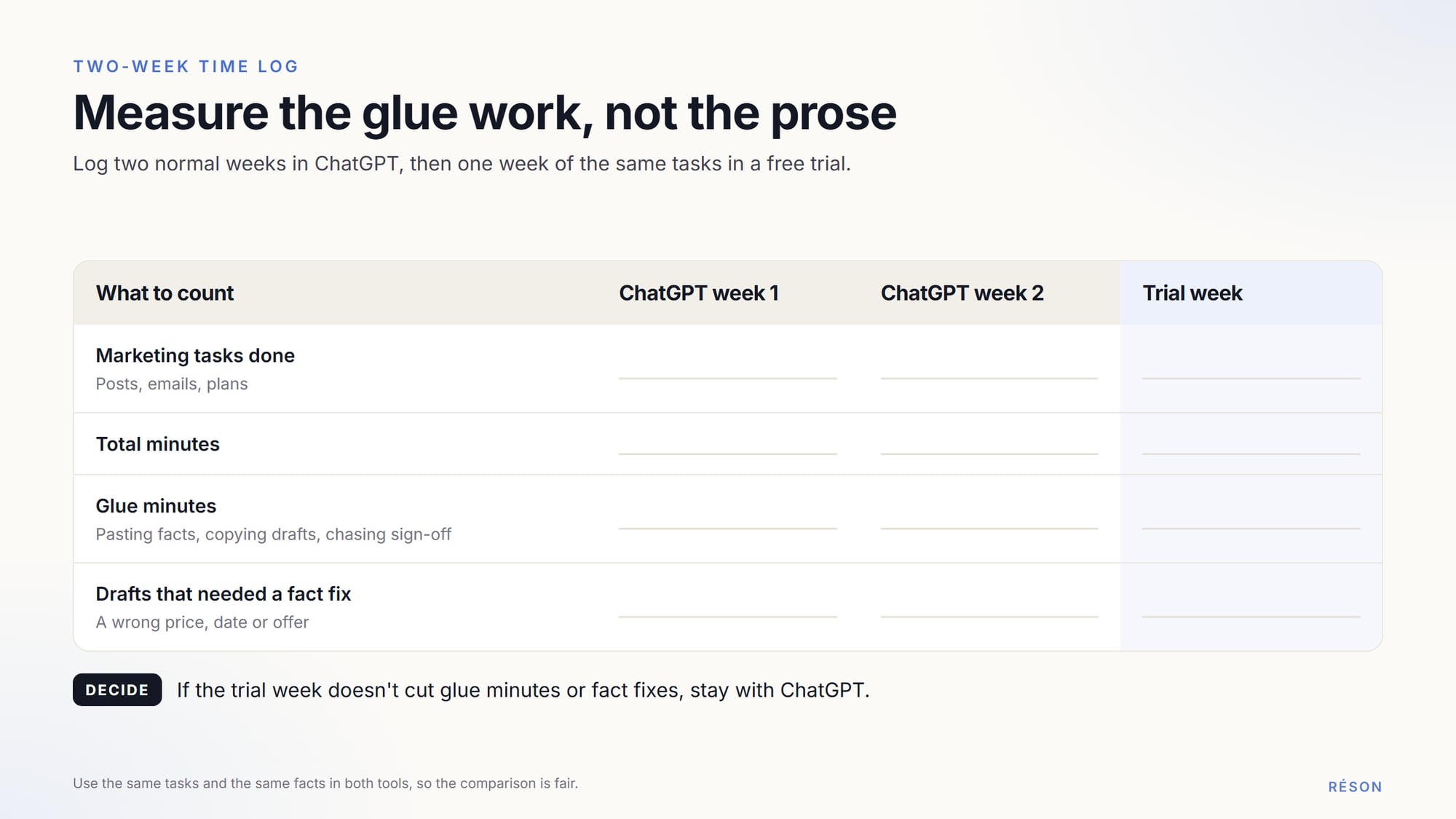
Keep a simple time log for two normal weeks while you work in ChatGPT. Then repeat the same tasks in a free trial of any marketing tool.
- Write down every marketing task you do, with the minutes it took.
- Mark the minutes spent on glue: pasting facts, copying drafts, chasing approval.
- Count the drafts that needed a factual fix before they could go out.
- Run a week of the same tasks in the trial tool, with the same facts.
- Compare glue minutes and fixes, not how polished the writing looks.
If the trial saves little time or adds steps, stay with ChatGPT. That is a perfectly good outcome.
Can you use ChatGPT and a marketing tool together?
Yes. A sensible split is to keep ChatGPT for open-ended thinking such as brainstorming or rewriting a hard email. The business record and the publishing plan then live in the marketing tool.
Two habits make the split work. First, keep one source of truth for facts, so the two tools don't drift apart. Second, check what you can take with you. OpenAI's export help page says personal plans can export chat history from Settings, under Data controls. Business workspaces can't use that self-service export, and an export can take up to seven days to arrive.
Try the hybrid workflow in Réson
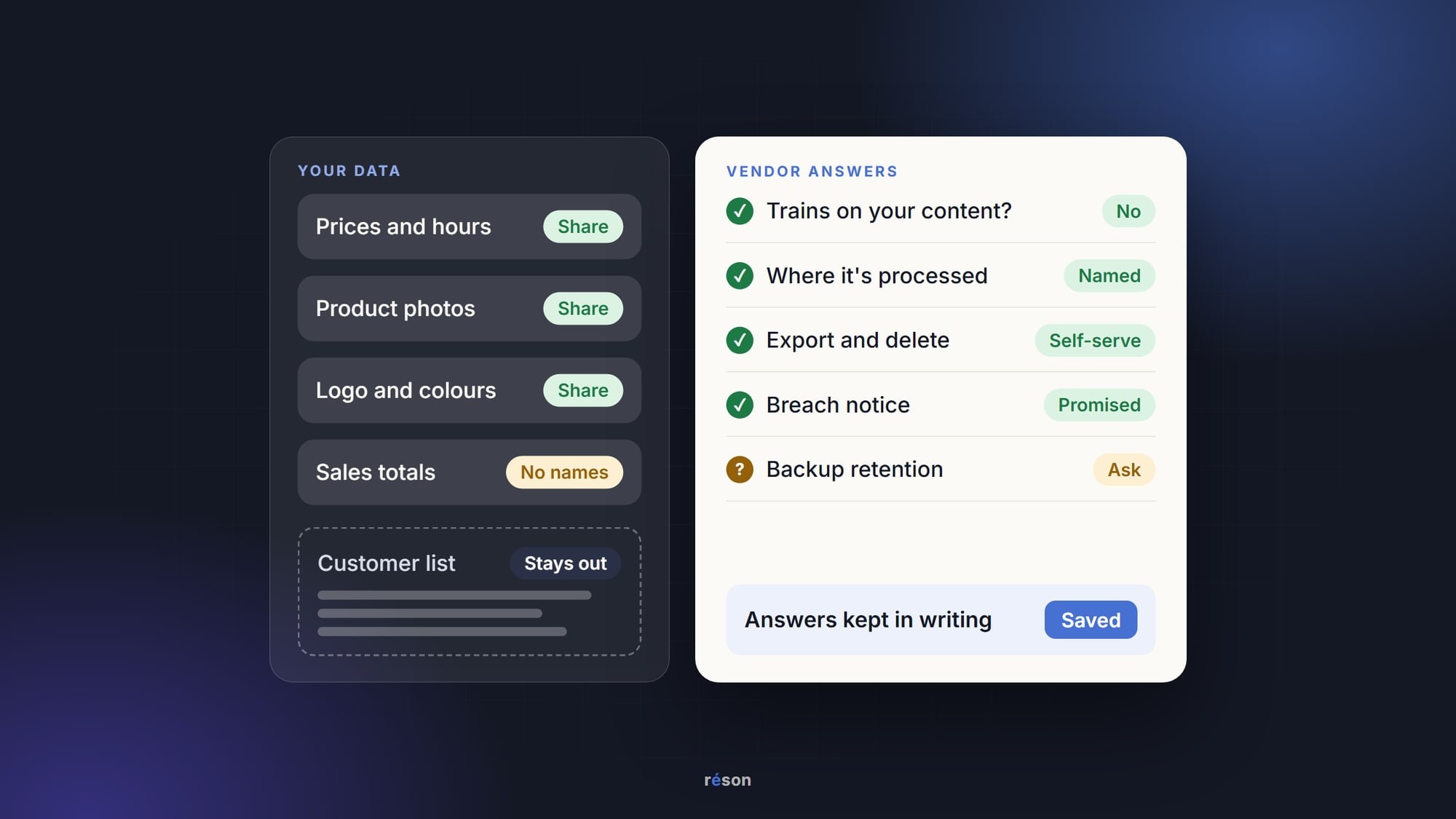
Réson is an AI marketing workspace for small businesses in Canada and Québec, and you can start it from a ChatGPT export. Réson sorts business conversations from personal ones and learns only from those you pick. Only what you wrote counts as a statement about your business. ChatGPT's replies are treated as AI-written text, never as facts.
Each fact in your profile shows where it came from. Anything Réson isn't sure about is marked as a suggestion until you confirm it. When you want ChatGPT again, a portable brief lets you copy your public facts and a task into any assistant.
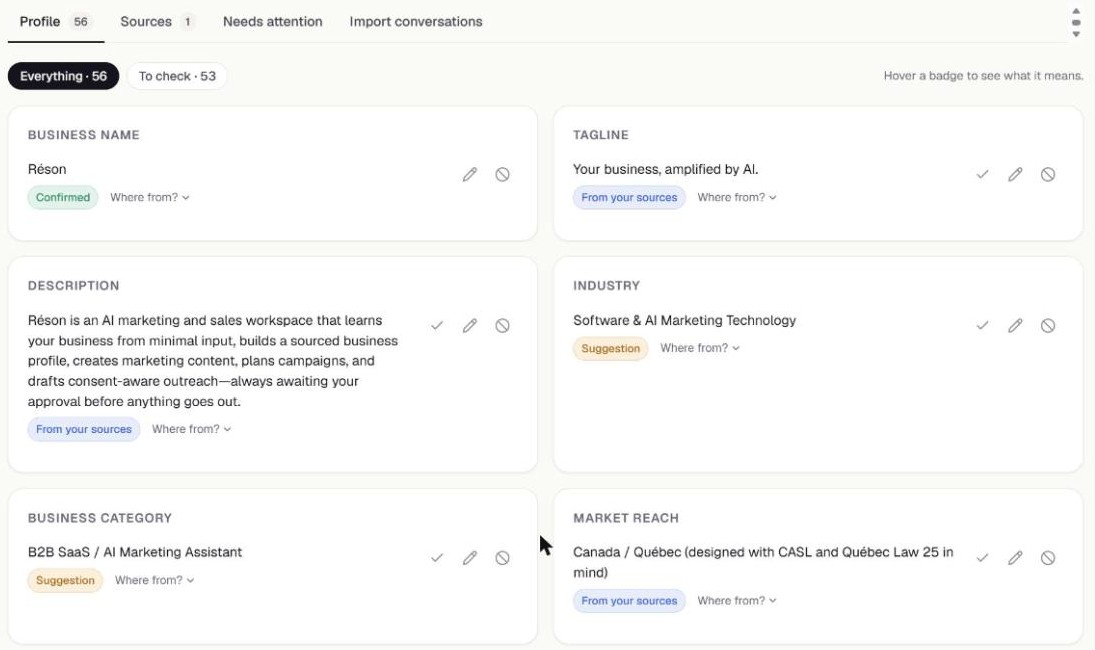
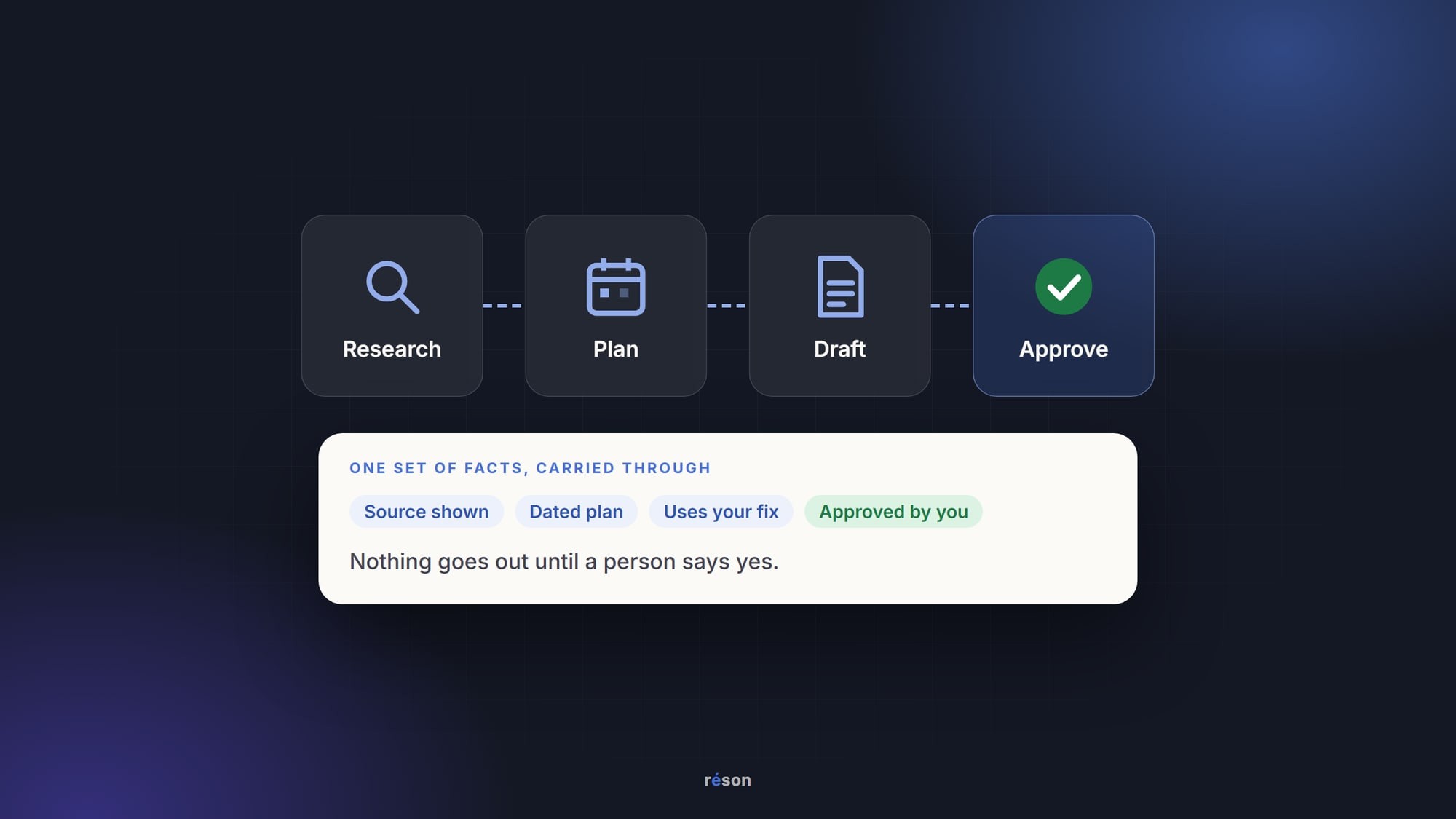
By default every post and email waits for your approval, and campaigns sit on a calendar. Réson works in English and French. Today you download what you create and post it where you like. You can start a free 14-day Réson trial with no credit card. Plans then start at CA$79 a month.
Frequently asked questions
Is ChatGPT enough for small business marketing?
Often, yes. If one person writes and approves everything, posts a few times a week in one language, and prices rarely change, ChatGPT with a project holding your fact sheet and tone is enough. A dedicated marketing tool starts to pay off when several people sign off on content, facts change monthly, you publish in English and French, or you send outreach email that needs consent checks.
Does ChatGPT remember my business details between chats?
It can. OpenAI's help pages say Memory can recall details from past chats and other sources, and projects keep files and instructions together. Memory is selective, though: OpenAI says it does not keep every detail, and project memory has no list you can browse. Keep prices, hours and offers in a fact sheet you upload to the project, and update it whenever something changes.
Does OpenAI use my ChatGPT marketing chats to train its models?
It depends on the account. As of November 2026, OpenAI's help pages say personal accounts may have chats used to improve models while the Improve the model for everyone setting is on, and you can turn it off in Data controls. OpenAI says it does not use content from ChatGPT Business, Enterprise or Edu workspaces for training by default.
What does an AI marketing workspace add to ChatGPT?
Mostly the work around the writing. A good marketing workspace keeps a list of business facts with their sources, puts a campaign on a calendar, holds drafts in an approval queue, and checks consent before outreach email. You can build each of these yourself around ChatGPT with spreadsheets and email, so the real question is how much of that upkeep you want to do by hand.
Can I move what I told ChatGPT into another marketing tool?
On personal plans, yes. OpenAI's help page says Free, Go, Plus and Pro accounts can export chat history from Settings, under Data controls, and the export can take up to seven days. Business workspaces can't use that self-service export. Some marketing tools, Réson among them, accept a ChatGPT export and let you choose which conversations they learn from.
Sources
- Projects in ChatGPT (OpenAI Help Center)help.openai.com
- Memory in ChatGPT (OpenAI Help Center)help.openai.com
- Scheduled tasks in ChatGPT (OpenAI Help Center)help.openai.com
- Exporting your ChatGPT history and data (OpenAI Help Center)help.openai.com
- ChatGPT plans and pricingchatgpt.com
- Frequently Asked Questions about Canada's Anti-Spam Legislation (CRTC)crtc.gc.ca
About the author
Réson
Réson is an AI marketing workspace for small businesses. It learns your business from your website, drafts posts, campaigns and articles, and waits for your approval before anything goes out.